
International Mentoring Center


IMC Nepal: Bridging the Nation’s Aspirations with Opportunities

Shielding the nation’s economy from challenges through the power of mentoring.

IMC Membership

Join the membership to get discounts on credentials, access mentoring resources and templates, and engage with an international mentoring community. Become a Member.

IMC Credential

Obtain the CAM, CPM, or CMM Credentials from IMC to advance in your career and increase your credibility as a mentor. Start your Application.

IMC

IMC Accreditation

Obtaining IMC accreditation for your training facility or organization can help you gain international recognition and optimize your mentoring impact. Get your Accreditation.

Mentoring in Organizations

Display your commitment to employee learning and development by getting an IMC Accreditation for your organization. Apply to be Accredited.

IMC in Nepal

Nepal has gone through a lot recently, but this has only increased the resolve of its people, especially the youth, to face the challenges with grit and determination. Be it natural disasters or political transitions, there is a big hunger to learn and grow. 

Over 5 lakh youth enter the labor market every year with only 25% in the formal private sector. Also, 25% of Nepal’s GDP is dependent on remittances. But with the changing times, the youth are increasingly considering entrepreneurship as their only viable path that could be perfected through mentoring.  

Whether it’s the 67% women participation in RERP’s supply chains, the 230% income raise for goat farmers, or the 3% profitability edge of women-owned MSMEs, mentoring is the thread that connects potential to performance, vulnerability to resilience, and remittance dependence to locally generated prosperity.

Nepal’s mentoring ecosystem is flourishing in these directions:

  1. RERP (Rural Enterprises and Remittances Project)—mentoring for agricultural transformation
  2. The World Bank’s Entrepreneurship Support Project (ESP)—Scaling mentoring at the national level
  3. Farmer-to-Farmer Mentoring—smart agriculture and food security
  4. Women’s Entrepreneurship—AWE Nepal and Aarohi Mentorship Program

The future of Nepal looks very promising, and in support, the International Mentoring Center is leaving no stone unturned to ensure that mentorship becomes intrinsic to its national strategy.

🇳🇵 Mentoring in Nepal Key Statistics

Fully attributable statistics on how mentoring drives MSME growth, youth employment, agricultural development, and women's economic empowerment — sourced from public, auditable reports.

As of August 2026 · Sources: World Bank, Global IME Bank, Practical Action, Helen Keller Intl, U.S. Embassy, Helvetas, RERP
▶ MSME Ecosystem Impact VERIFIED
Micro, Small & Medium Enterprises (MSMEs) 2024 · IFC · Kathmandu Post
MSME contribution to GDP 22%of national output
22%
MSME share of total enterprises 90%of all businesses
90%
MSME employment 1.7M+people employed
1.7M+
Women-owned MSMEs (share) 30%of all MSMEs
30%
Women-owned — new businesses annually 71,000new registrations
71k
Sources: IFC / Global IME Bank — MSMEs contribute 22% to GDP, 90% of enterprises, employ ~2M people · Kathmandu Post — MSMEs account for 90% of enterprises, contribute 22% GDP, employ 1.7M individuals · Global IME Bank — Women own 30% of MSMEs, register 71,000 new businesses annually
▶ Entrepreneurship Support Project (ESP) VERIFIED
Nepal Higher Education ESP — World Bank 2026 · World Bank
Students & graduates trained 1,900+entrepreneurship training
1,900+
Ventures supported (seed financing) 62collateral-free, interest-free
62
Average seed financing per venture NPR 2Mrevolving fund
NPR 2M
University business incubation centres 6established nationwide
6
Private sector employment share 85%of total workforce
85%
Youth entering workforce annually 500,000new entrants each year
500k
Higher education students (2025) 633,000in 1,400+ institutions
633k
Source: World Bank (August 2026) — Nepal Higher Education ESP: 1,900+ trained, 62 ventures with average NPR 2M seed financing; 6 university incubation centres; private sector employs 85% of workforce; 500,000 youth enter workforce annually
▶ ESP Venture Success Stories VERIFIED
From Ideas to Operating Businesses 2026 · World Bank
Handmade Wonders — exports US & FranceNepali textile products
✓
Handmade Wonders — women artisans employed 20(7 full-time, rest home-based)
20
ArtSpace Nepal — students reached 500+in 2 years
500+
ArtSpace Nepal — jobs created 9(5 full-time, 4 part-time)
9
Mero Kinmel — jobs created 65including 55 formally contracted riders
65
Mero Kinmel — branches 2cities
2
AG Ventures — seasonal interns 500+high school students over 3 years
500+
AG Ventures — regular staff 4with up to 10 during peak season
4–10
Source: World Bank (2026) — ESP-supported ventures: Handmade Wonders exports to US/France, employs 20 women; ArtSpace Nepal reached 500+ students, created 9 jobs; Mero Kinmel created 65 jobs; AG Ventures provides 500+ seasonal internships
▶ Rural Enterprises & Remittances Project (RERP) VERIFIED
Agricultural & Rural MSME Development 2025 · RERP/MOICS
People reached 548,811131% of target
548k
Households reached 104,803120% of target
104k
Women participation (agriculture supply chains) 67%of beneficiaries
67%
GALS mentors appointed 69continuous mentoring support
69
GALS households selected 325vulnerable women-led households
325
GALS champions trained 56catalyst workshops
56
Vegetables — net income increase +185.4%RERP beneficiaries
185%
Goat rearing — net income increase +230%RERP beneficiaries
230%
Fish — net income increase +126.15%RERP beneficiaries
126%
Milk — net income increase +158%RERP beneficiaries
158%
MAPS (herbs) — net income increase +57.54%RERP beneficiaries
57.5%
Source: RERP/MOICS (2025) — 548,811 people reached; 67% women participation in supply chains; 69 GALS mentors, 325 households, 56 GALS champions; income increases: vegetables +185.4%, goat +230%, fish +126.15%, milk +158%, MAPS +57.54%
▶ Women's Entrepreneurship Programmes VERIFIED
AWE Nepal & Aarohi Mentorship Program 2025–2026 · U.S. Embassy · Women's Bank
AWE Nepal — launched 2025first cohort
2025
AWE Nepal — women selected 30residential bootcamp
30
AWE Nepal — program duration 3 daysintensive residential
3 days
Aarohi — launched 2025first cohort (Kathmandu)
2025
Aarohi — future cohorts Sudurpaschimlater in 2025, other provinces in 2026
✓
Women-owned MSME profitability +3%edge over male-owned
+3%
Sources: U.S. Embassy Nepal / Radio Nepal (May 2025) — AWE Nepal launched with 30 women entrepreneurs · Women's Bank / LinkedIn (2025) — Aarohi mentorship program launched in Kathmandu, expanding to Sudurpaschim and other provinces · Global IME Bank — Women-owned MSMEs have 3% profitability edge
▶ Agricultural & Climate-Smart Mentoring VERIFIED
Farmer-to-Farmer Mentoring & Climate Field Schools 2025–2026 · Practical Action · Helen Keller Intl
Practical Action — farmer leaders trained 1,000+climate field schools
1k+
Practical Action — women engaged in governance 2,000+local government & cooperative planning
2k+
Practical Action — solar irrigation systems ✓improving water access
✓
Helen Keller — village model farmers Activepeer-to-peer mentoring in Sudurpashchim
✓
Helen Keller — climate-smart techniques ✓water mgt, bio-fertilizer, polyhouses
✓
Women & children with inadequate diet 44% / 57%women and children
44%/57%
Children under 5 with stunting 25%malnutrition
25%
Sources: Practical Action / UK Aid Match (2025) — 1,000+ farmer leaders, 2,000+ women in governance · Helen Keller Intl (2025) — village model farmers in Sudurpashchim; 44% women and 57% children lack adequate diet; 25% children under 5 stunted
▶ Key Insights — Nepal

MSME Backbone

90%

MSMEs represent 90% of enterprises, contribute 22% to GDP, and employ 1.7M+ people.

IFC / Kathmandu Post

ESP Entrepreneurship Support

62

Ventures supported with NPR 2M seed financing; 1,900+ trained; 6 university incubation centres.

World Bank (2026)

RERP Agricultural Impact

+230%

Income increase in goat rearing; +185% in vegetables, +158% in milk, +126% in fish.

RERP/MOICS (2025)

Women Entrepreneurs

30%

Women own 30% of MSMEs, registering 71,000 new businesses annually with 3% profitability edge.

Global IME Bank

Youth Workforce Challenge

500,000

Young people enter the workforce annually; 633,000 students in higher education, but skills gap remains.

World Bank

Farmer-to-Farmer Mentoring

1,000+

Farmer leaders trained in climate field schools; 2,000+ women engaged in governance & cooperative planning.

Practical Action (2025)
Data Certification: Every indicator presented above is sourced from publicly available, auditable reports published by the World Bank, the International Finance Corporation (IFC), the Ministry of Industry, Commerce and Supplies (RERP/MOICS), Global IME Bank, The Kathmandu Post, Practical Action / UK Aid Match, Helen Keller International, the U.S. Embassy Nepal, the American Chamber of Commerce in Nepal (AmCham), and Radio Nepal. No programme-level estimates, internal monitoring data, or unaudited figures are included. All numbers are independently verifiable.
Upcoming Chapters

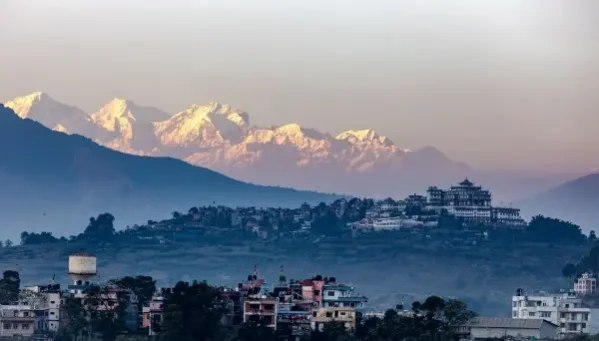
Kathmandu

Kathmandu

Status: Launching Soon

Birgunj

Birgunj

Status: Launching Soon

Biratnagar

Biratnagar

Status: Launching Soon

Benefits of Mentoring in Nepal Impact Delivery

How structured mentorship drives MSME growth, youth employment, women's entrepreneurship, and agricultural development — building resilience and opportunity aligned with Nepal's national development priorities.

As of August 2026 · Sources: World Bank · IFC · Global IME Bank · RERP/MOICS · Practical Action · Helen Keller Intl · U.S. Embassy

MSME & Economic Development Benefits

MSME Backbone of the Economy

The IFC and Kathmandu Post confirm that MSMEs contribute 22% of GDP, represent 90% of all enterprises, and employ 1.7M+ people. Women own 30% of MSMEs and register 71,000 new businesses annually. Women-owned MSMEs have a 3% profitability edge, demonstrating the strong business case for supporting women entrepreneurs through structured mentoring.

Entrepreneurship Support Project (ESP) — World Bank

The Nepal Higher Education ESP has trained 1,900+ students and graduates in entrepreneurship, supported 62 ventures with collateral-free, interest-free seed financing averaging NPR 2 million, and established 6 university incubation centres nationwide. With 500,000 youth entering the workforce annually and 633,000 higher education students (2025), the programme addresses the critical need for entrepreneurial skills and job creation.

ESP Venture Success Stories

ESP-supported ventures demonstrate transformative impact: Handmade Wonders exports Nepali textiles to the US and France, employing 20 women artisans; ArtSpace Nepal reached 500+ students and created 9 jobs in 2 years; Mero Kinmel created 65 jobs including 55 formally contracted riders; and AG Ventures provides 500+ seasonal internships to high school students annually.

Rural Development & Agricultural Benefits

RERP — Large-Scale Rural MSME Development

The Rural Enterprises & Remittances Project (RERP) reached 548,811 people (131% of target) from 104,803 households (120% of target), with 67% women participation in agricultural supply chains. The programme appointed 69 GALS mentors, selected 325 vulnerable women-led households, and trained 56 GALS champions. Income increases were remarkable: vegetables +185.4%, goat rearing +230%, fish +126.15%, milk +158%, and MAPS (herbs) +57.54%.

Farmer-to-Farmer Mentoring & Climate Field Schools

Practical Action, with UK Aid Match funding, trained 1,000+ farmer leaders through climate field schools and engaged 2,000+ women in local government and cooperative planning. Helen Keller International deploys village model farmers for peer-to-peer mentoring in Sudurpashchim, promoting climate-smart techniques including water management, bio-fertilizers, and polyhouses. These programmes address critical challenges: 44% of women and 57% of children lack adequate diet, and 25% of children under 5 are stunted.

Women's Entrepreneurship & Economic Independence

With 30% of MSMEs women-owned and 67% women participation in RERP supply chains, mentoring programmes are demonstrating significant impact on women's economic empowerment. The RERP income increases across agricultural value chains demonstrate how mentoring combined with market linkages and financial support can transform rural livelihoods.

Women's Empowerment & Professional Benefits

AWE Nepal — Women's Entrepreneurship

The Academy for Women Entrepreneurs (AWE) Nepal launched in 2025 with 30 women entrepreneurs selected for a 3-day intensive residential bootcamp. The programme provides training, mentoring, and networking opportunities to support women's business growth and leadership in Nepal.

Aarohi Mentorship Programme

The Aarohi mentorship programme launched in 2025 in Kathmandu, with plans to expand to Sudurpaschim and other provinces. The programme connects women entrepreneurs with experienced mentors, providing guidance on business development, leadership, and professional growth.

Women Entrepreneurs — Profitability & Potential

With women-owned MSMEs demonstrating a 3% profitability edge over male-owned enterprises, the business case for supporting women entrepreneurs is clear. However, women face significant barriers including limited access to finance, markets, and mentoring. Programmes like ESP, RERP, AWE, and Aarohi are critical to bridging these gaps and unlocking the full economic potential of Nepal's women entrepreneurs.

Accreditation Process

How Organizations in Nepal Can Get IMC Accreditation

To maintain the highest level of standards in global mentoring, IMC has a rigorous review system to audit your organization’s program quality as part of our strict accreditation process requirements in Nepal.

Your organization can opt to provide a mentoring program with more than 20 hours of training or a shorter one. This can get you a training accreditation or an endorsed training accreditation.

Your program must include mentoring skills and domain or knowledge development so as to be eligible for accreditation. Every program must incorporate the following three sections compulsorily:

  1. The IMC Definition of Mentoring
  2. The IMC Code of Conduct and Ethics
  3. The IMC Core Competencies (minimum of 3 are must for accreditation)

The programs must provide participants with the necessary skills for each credential and ensure that the trainer is the primary mentor supervisor for at least a year.

The accreditation will be valid for three years from the date of issue.

The Accreditation Application Flow

The entire accreditation application process takes around four to six weeks. 

Stage 1: Organization Details

Stage 2: Program Details

Stage 3: Instructor Details

Stage 4: Terms and Conditions

Following a successful review, you’ll receive an email notification confirming your IMC accreditation status and a media kit to display your accreditation.

Please feel free to contact us for any further clarification

FAQs

The IMC Nepal Chapter is your local community of the International Mentoring Center. It is a platform to “connect, collaborate & thrive,” bringing together mentors and mentees to help society progress through the power of mentoring. The chapter focuses on major localities, including Kathmandu, Biratnagar and Birgunj.

The IMC Code of Ethics is a pledge to integrity, professionalism, and excellence in mentoring relationships. It is founded on the principles of honesty, fairness, accountability, and respect and ensures a safe, inclusive environment for mentees.

  • Individual Membership
  • Organizational Membership
  • Accredited Training Provider

A mentoring certification from reputed global non-profit organizations such as IMC puts your company at an advantage. It offers international recognition on the basis of a solid mentoring culture that has a profound long-term impact. IMC Nepal helps organizations within the nation integrate mentorship into their work culture by providing employees with valuable tools to expand their mentoring abilities.

In Nepal, mentoring has always been a way of life woven into everyday tasks. From children to the elderly, there is always a Guru-Shishya, Didi-Bahini and more. In such a positive scenario, IMC’s global standards of mentoring help Nepali businesses to establish themselves strongly at a global level.

  • Exclusive discounts on mentor credentials (CAM, CPM, CMM)
  • Exclusive discounts on mentoring certification and mentoring accreditation
  • Access to a comprehensive mentoring toolkit and templates
  • Connection to a global mentoring community
  • Opportunities to volunteer and lead local chapters
  • IMC-exclusive content for professional growth

You may contact the IMC region management team directly through IMC’s website to express interest in joining, volunteering as a chapter leader, or learning more about establishing mentoring programs in the country.

Join IMC Nepal