
International Mentoring Center


IMC Hungary: Envisioning Mentorship Across the Nation’s Economic Landscape

Guiding the deployment of mentorship towards a scalable economy and high human development index.

IMC Membership

Join the IMC Hungary Region and gain special discounts on mentor credentials, mentoring certification, and mentoring accreditation. Improve your mentoring skills with handy resources and templates as a member of an international mentoring community.

IMC Credential

Progress your career and enhance your credibility with qualifications such as CAM, CPM, or CMM. The IMC Hungary Region has many opportunities to gain and maintain these qualifications, which enhance your growth as a mentor.

IMC

IMC Accreditation

Enhance your global reputation for your mentoring programs through IMC accreditation of your training organization or center. Accreditation ensures your mentoring programs meet international mentoring standards in Hungary.

Mentoring in Organizations

Demonstrate your organization's commitment to professional development through mentoring certification. IMC accreditation aligns your mentoring programs with global best practices in mentoring.

IMC in Hungary

Hungary is witnessing low unemployment and a steady rise in wages for its population, thanks to mentoring. The nation leverages mentoring as a cost-effective tool to boost innovation, entrepreneurship, and inclusive growth. Whether it’s the START program for young entrepreneurs, the TALENTAHUB initiative for rural women, or Design Terminal’s startup mentoring, Hungary is on a mentoring mission to fireproof its future.

The International Mentoring Center Hungary walks alongside Hungary to maintain a seamless drive into the future through exceptionally high mentoring standards.

🇭🇺 Mentoring in Hungary Key Statistics

Fully attributable macroeconomic, labour market and fiscal indicators — sourced exclusively from public, auditable reports.

As of July 2026 · Sources: KSH · MNB · IMF · Eurostat · FocusEconomics
National Economic Indicators VERIFIED
Hungary – Macroeconomic Landscape 2024–2027 · Public Records
Real GDP growth (2024) 0.6%seasonally and calendar adjusted
0.6%
Real GDP growth (2025 forecast) 0.6%IMF estimate (Oct 2025)
0.6%
Real GDP growth (2026 forecast) 1.9%OECD forecast (Dec 2025)
1.9%
Real GDP growth (2027 forecast) 2.3%OECD forecast (Dec 2025)
2.3%
Nominal GDP (2024) 81,447.7BHUF (approx. $222.9B)
81.4T HUF
GDP per capita (2024) $23,292current USD
$23,292
Sources: KSH (Hungarian Central Statistical Office) · IMF World Economic Outlook (Oct 2025) · OECD (Dec 2025) · World Bank · Macrotrends
Inflation Indicators VERIFIED
Consumer Price Inflation (CPI) 2023–2027 · KSH · European Commission
Average inflation (2023) 17.0%peak
17.0%
Average inflation (2024) 3.7%annual average
3.7%
Average inflation (2025 forecast) 3.6%European Commission
3.6%
Average inflation (2026 forecast) 3.2%European Commission
3.2%
Average inflation (2027 forecast) 3.0%MNB forecast
3.0%
Core inflation (2024) ~6.0%excluding energy and food
~6.0%
Sources: European Commission (Nov 2025) · Hungarian Central Statistical Office (KSH) · Magyar Nemzeti Bank (MNB)
Labour Market Indicators VERIFIED
Employment, Unemployment & Labour Force 2024–2025 · KSH · ILO · IndexBox
ILO unemployment rate (2024) 4.5%of total labour force
4.5%
ILO unemployment rate (2025) 4.5%ILO modelled estimate
4.5%
Unemployment rate (national, 2024) 4.4%Labour Force Survey
4.4%
Unemployment rate (national, 2025) 4.4%Q2 2025
4.4%
Employed persons (April 2026) 4.619Mslight decline
4.619M
Labour force participation (2024) ~57.1%of working-age population
~57.1%
Sources: KSH (Labour Force Survey 2024–2025) · ILO modelled estimates · IndexBox (World Bank data) · YCharts
Youth Unemployment VERIFIED
Youth (Ages 15–24) Labour Market 2024 · KSH · Macrotrends
Youth unemployment rate (2024) 14.07%of total labour force aged 15–24
14.07%
Youth unemployment rate (2023) 12.80%ILO estimate
12.80%
Youth unemployment rate (2022) 10.56%post-pandemic low
10.56%
Youth unemployment rate (2024, Q4) 14.6%national estimate
14.6%
Youth unemployment rate (2025, Q2) 14.2%ILO estimate
14.2%
Sources: Macrotrends (World Bank / ILO data) · CEIC Data · datosmacro.expansion.com
Fiscal & Public Debt Indicators VERIFIED
Government Finances & Debt 2024–2026 · KSH · Eurostat · MNB
General government deficit (2024) 5.0%of GDP (KSH preliminary data)
5.0%
General government deficit (2025 forecast) 5.0%of GDP (Fitch)
5.0%
General government deficit (2026 forecast) 5.6%of GDP (Fitch)
5.6%
Government debt (2024) 73.5%of GDP
73.5%
Government debt (2025 forecast) 74.5%of GDP
74.5%
Government debt (2026 forecast) 73.8%of GDP
73.8%
Sources: KSH (National Accounts 2024) · Eurostat · Lloyd's Bank Trade · Coface · MNB
Current Account VERIFIED
External Balance 2024–2025 · MNB · FocusEconomics
Current account balance (2024) 2.2%of GDP — surplus
2.2%
Current account balance (2024, EUR) 3.6BEUR surplus
3.6B
Current account balance (2025) 1.7%of GDP — surplus
1.7%
Current account balance (2025, EUR) 3.6BEUR surplus
3.6B
Decade average current account (2014–2024) -0.2%of GDP
-0.2%
Sources: FocusEconomics · Magyar Nemzeti Bank (MNB) · CEIC Data
Key Insights

Anemic Growth

0.6%

Hungary's GDP grew by only 0.6% in 2024, with a similar rate projected for 2025 — among the lowest in the region.

KSH · IMF (2024–2025)

Inflation Normalisation

17.0% → 3.7%

Inflation plummeted from 17.0% in 2023 to 3.7% in 2024, though core inflation remained elevated at ~6%.

KSH · European Commission

Low Unemployment

4.5%

Hungary's ILO unemployment rate remained stable at 4.5% in 2024–2025, below the EU average.

KSH · ILO (2024–2025)

Youth Unemployment Challenge

14.07%

Youth unemployment is more than three times the national average — a critical target for mentoring.

Macrotrends (2024)

High Public Debt

73.5%

Hungary's government debt exceeds 70% of GDP, well above the EU's 60% threshold.

KSH · Eurostat (2024)

Current Account Surplus

2.2%

Hungary recorded a current account surplus of 2.2% of GDP in 2024 — a significant turnaround from deficits in previous years.

MNB · FocusEconomics
Data Certification: Every indicator presented above is sourced from publicly available, auditable reports published by the Hungarian Central Statistical Office (KSH), the Magyar Nemzeti Bank (MNB), the International Monetary Fund (IMF), the European Commission, the Organisation for Economic Co-operation and Development (OECD), Eurostat, the International Labour Organization (ILO), FocusEconomics, and Macrotrends. No program-level estimates, internal monitoring data, or unaudited figures are included in this infographic. All numbers are independently verifiable.

Upcoming Chapters

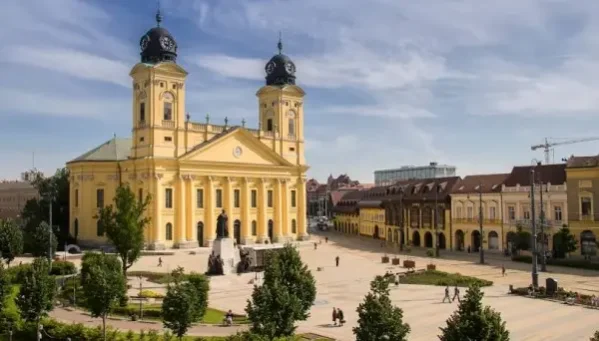
Budapest

Budapest

Status: Launching Soon

Debrecen

Debrecen

Status: Launching Soon

Szeged

Szeged

Status: Launching Soon

Benefits of Mentoring in Hungary Impact Delivery

How structured mentorship drives workforce integration, academic excellence, and professional leadership — building resilience and opportunity across Hungary.

As of July 2026 · Sources: Youth Wiki · United Way Hungary · Corvinus University · Semmelweis University · OECD · CEDEFOP · WILL Foundation · Interreg Europe

Workforce & Employment Inclusion Benefits

Youth Guarantee & Labour Market Integration

The Youth Guarantee Active Labor Market Program is the backbone of youth employment initiatives in Hungary, aiming to promote the entry of young people under 30 into the labor market by providing wage subsidies, entrepreneurship support, and training linked to labor market services such as job search assistance and mentoring. The program is implemented through multiple organizations, including the Széchenyi Program Office, FIVOSZ, and the Hungarian Foundation for Enterprise Promotion.

Youth Career Starters Program

United Way Hungary's "United for Young Career Starters" project in Debrecen provided 112 participants with individual mentoring, labor market insights, and practical skills training over 9 months. Young people received personalized mentoring to help them set and achieve their goals, learned about labor market realities through group discussions with business professionals, and gained ICDL certificates. The program significantly boosted participants' self-confidence and reduced anxiety.

Mentoring for NEET & Vulnerable Youth

The "Back on Track" Mentoring Program, piloted across Bulgaria, Hungary, Romania, Serbia, and Bosnia and Herzegovina, connects trained mentors with rural NEETs (Not in Education, Employment, or Training), helping them define personal goals, develop essential skills, and take concrete steps toward building their careers. Mentoring proved to be the key success factor—where mentors provided regular check-ins and encouragement, learners remained motivated and were more likely to complete modules. The Incorpora program in Hungary demonstrates that personalized mentoring and flexible follow-up can effectively support NEET youth in entering the labor market.

Academic & Education Development Benefits

University Mentoring & Corporate Partnerships

The OTP-Corvinus Mentorship Programme has grown significantly since its inception: the first round included 8 mentor-mentee pairs, the second increased to 12, and the third and fourth rounds launched with 16 pairs each. The four-month program offers economics and finance students practical experience, personal career support, and valuable long-term professional connections with senior executives of OTP Bank. Four mentees from previous programs are now employees of OTP Bank.

International Medical Student Mentoring

The Semmelweis International Mentoring Program supports first-year medical students in navigating university life, both academically and personally. In the 2024/25 academic year, 185 mentees from 52 countries were paired with 113 mentors — 136 mentees and 86 mentors in the English program, and 49 mentees and 27 mentors in the German program.

Vocational Education & Equal Opportunities

Hungary's Equal Opportunities Program (EOP), launched in 2024, aims to reduce dropout rates and support struggling students in vocational education and training. Vocational teachers mentor 2–5 students individual sessions. In the Autumn 2024 nationwide rollout, 3,697 teachers mentored 11,227 students across 338 vocational institutions. Results show that the average student GPA improved from 2.84 to 3.11, and the number of failing students decreased by 32% (from 6,205 to 4,198).

Professional & Social Impact Benefits

Women's Leadership Development

The Women in Leadership League (WILL) Foundation, founded in March 2024 by Hungarian business leaders, empowers women across Hungary and Central Eastern Europe to advance in leadership roles. The WILL Program offers a year-long leadership course for mid-level female managers, combining workshops, mentorship, networking opportunities, and coaching from successful women leaders. The CEU Democracy Institute Masterclass for Women, a ten-month leadership initiative, concluded with 21 fellows receiving their certificates, laying a strong foundation for fostering a new generation of female leaders in Hungary.

Women's Entrepreneurship & Agribusiness

TalentA Hungary supports women in agribusiness through courses, mentoring, and project funding. The program engaged 29 participants from 15 Hungarian counties each year in 2021 and 2023, with approximately 70% of women completing all modules. Six winning projects received micro-grants plus individual mentoring. The TALENTAHUB program, launched by the Hungarian Women's Union, provides a two-year comprehensive training and mentoring program for women entrepreneurs across seven regions.

Teacher Mentorship & Education Quality

According to the 2024 OECD TALIS survey, mentorship for novice teachers in Hungary has grown significantly — from 18% in 2018 to 49% in 2024, a 27-point increase. Currently, 91% of Hungarian school leaders report that their institutions run active mentoring programs, compared to the OECD average of 80%. The Equal Opportunities Program provides vocational teachers with a one-time gross allowance of HUF 300,000 (approximately EUR 760) for mentoring 2–5 students. The "Tanítsunk Magyarországért!" (Teach for Hungary) mentor program offers student mentors a monthly stipend of HUF 37,000, plus additional support for children-related expenses.

Accreditation Process

How Organizations in Hungary Can Get IMC Accreditation

To maintain the highest level of standards in global mentoring, IMC has a rigorous review system to audit your organization’s program quality as part of our strict accreditation process requirements in Hungary.

Your organization can opt to provide a mentoring program with more than 20 hours of training or a shorter one. This can get you a training accreditation or an endorsed training accreditation.

Your program must include mentoring skills and domain or knowledge development so as to be eligible for accreditation. Every program must incorporate the following three sections compulsorily:

  1. The IMC Definition of Mentoring
  2. The IMC Code of Conduct and Ethics
  3. The IMC Core Competencies (minimum of 3 are must for accreditation)

The programs must provide participants with the necessary skills for each credential and ensure that the trainer is the primary mentor supervisor for at least a year.

The accreditation will be valid for three years from the date of issue.

The Accreditation Application Flow

The entire accreditation application process takes around four to six weeks. 

Stage 1: Organization Details

Stage 2: Program Details

Stage 3: Instructor Details

Stage 4: Terms and Conditions

Following a successful review, you’ll receive an email notification confirming your IMC accreditation status and a media kit to display your accreditation.

Please feel free to contact us for any further clarification

FAQs

By joining, members gain access to a comprehensive ecosystem of mentoring credentials, certifications, and accreditations. Members also enjoy membership perks and can make use of resources to upgrade their mentoring ability. Additionally, organizations can include mentoring as part of their company and endow the workforce with productive tools to enhance mentoring skills.

As a chapter leader, you will have the opportunity to develop mentoring programs, collaborate with other mentors, and increase community engagement. As a leader, you also gain access to IMC-exclusive resources, elevating your role and continuing your professional and personal growth through mentoring certifications and credentials.

For more details or to express your interest in joining the mentoring network in Hungary, you can contact the IMC Hungary Region Management Team directly through the main IMC support channels on the website.

The IMC Hungary region hosts accessible, engaging digital training programs and networking events. These bring together mentors and mentees from diverse backgrounds to expand knowledge, connect with experts, and build professional networks.

The MIO (Mentoring in Organizations) badge is a mark of distinction awarded to organizations where mentoring is embedded, sustainable, and measurable.

The MIO badge enables you to institutionalize mentoring as a strategic advantage.

Join IMC Hungary